

Sustainability is fast becoming a reality in the UAE. Rising costs, environmental regulations, and national climate targets are increasingly motivating businesses to use resources efficiently. Energy efficiency and conserving energy in Dubai, Abu Dhabi and Sharjah can also help to manage energy costs.
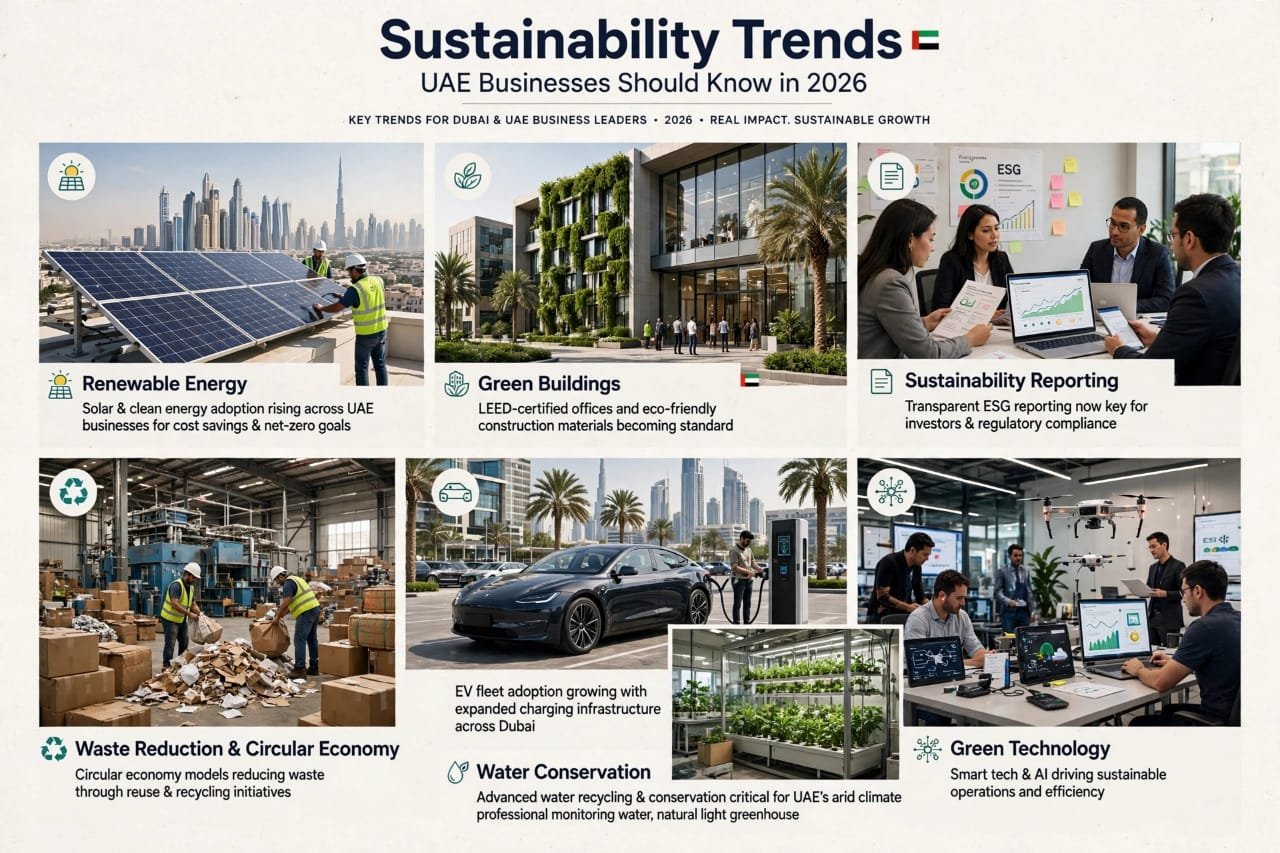
The key sustainability trends UAE 2026 feature renewable energy, energy-efficient buildings, minimising waste, electric transport and environmental reporting. The changes are relevant for both big companies and small companies.
Key Sustainability Trends UAE 2026 Businesses Should Follow
1. Greater Investment in Renewable Energy
The UAE’s clean energy policy continues to focus on solar energy. Dubai Electricity and Water Authority (DEWA) is a prime example of investing in large scale renewable energy projects through Mohammed bin Rashid Al Maktoum Solar Park.
Also read: Hospitality Trends UAE 2026: Smart Hotels and Guest Expectations
Commercial building owners can evaluate rooftop solar for warehouses and factories. Compare the electricity consumption, installation costs, space available and potential savings. The expansion of renewable energy UAE projects also presents potential opportunities in construction, engineering, and maintenance.
2. Energy-Efficient Offices and Green Buildings
A lot of energy is used for air conditioning in many buildings in the UAE. Cooling efficiency enhancements can assist businesses in controlling electricity usage during the summer.
Examples of helpful sustainability trends that Dubai businesses can implement include LED lighting, smart thermostats, insulation, efficient cooling systems, and automated control systems. Excessive electricity use can be detected during energy audits.
The Al Sa’fat green building evaluation system is the framework that helps to encourage sustainable building design in Dubai. Businesses can also reduce electricity consumption by keeping air-conditioning units in good working order and adjusting their operating times.
3. Better Sustainability Reporting
Consumers, lenders, investors and corporate partners may seek environmental performance information. Large businesses may need to meet formal reporting requirements, while smaller suppliers may need to provide information under their contracts.
Track sustainability efforts that UAE businesses should be aware of, national climate pledges and regulations. There may be some requirements, check which ones apply. Monitor electricity, water, fuels, waste and GHGs. Don’t make carbon neutral or certified claims without supporting evidence.
4. Waste Reduction and Circular Business Models
The waste management is an essential part of sustainable business UAE strategy. Businesses can check packaging, buying, food waste and recycling for any costs that are not needed.
Hotels can do more to reduce food waste, retailers can do less packing and manufacturers can do more reusing. Circular models are about repairing, reusing, refurbishing and recycling products to prolong their life.
Carry out a waste audit, determine the biggest waste streams and review recycling services in the area before establishing targets.
5. Electric Vehicles and Cleaner Transport
Fuel consumption and emissions can be monitored by fleet operators. Improvement of the route planning and proper maintenance can improve the efficiency.
DEWA’s EV Green Charger program is a contribution to Dubai’s charging infrastructure. When considering a vehicle change, evaluate acquisition costs, charging availability, distances traveled, and if there are a variety of electric vehicles.
6. Green Technology and Smarter Resource Management
Smart meters, building systems, automated lighting and water sensors are used to monitor the use of resources. Hotels can monitor water consumption, and warehouses can control the lighting based on the number of people present. For any company looking into green technology UAE, the cost of the technology they are looking at must be weighed against the amount of money they will save. Also, companies should look for technologies that will help them with a specific problem.
7. Water Conservation and Responsible Sourcing
Water conservation is important since water resources are finite. Businesses can repair leaks, install low flow taps, and use smart irrigation.
Dubai companies can select products that are reusable, minimize packaging, bulk order, and inquire about the source of materials when managing sustainable business practices.
How Businesses Can Prepare for 2026
Measure performance and select reasonable changes.
Enterprises must think about the impact of sustainability on their customers and employees. Purchasing guidelines, instructions to recycle and reminders about saving energy make it easier to keep practices. Delegating the task to a team member helps them ensure that they review the records and targets. If budgets are tight, consider low cost measures first, then plan carefully using savings.
- Review consumption: Gather data on electricity, water, fuel and waste.
- Set clear targets: Make measurable goals and deadlines.
- Check regulations: Review pertinent regulations and reporting requirements.
- Measure progress: Regularly compare and record savings.
WETEX in Dubai is a space for the discussion of water, energy and clean technology solutions. Analyze the return, maintenance requirements, and suppliers before investing.
Frequently Asked Questions
What are the main sustainability trends UAE businesses should know in 2026?
Renewable energy, efficient buildings, environmental reporting, waste reduction, electric transport, water conservation, and green technology are among the key trends.
Can small businesses benefit from sustainability?
Yes. Small businesses have the potential to save energy costs, minimize packaging waste, make better buying choices and manage water use more efficiently. The appropriate measures are based on operations and budgets.
Does every UAE business need sustainability reporting?
There are variations in requirements by regulation, industry and company structure. Companies should review their legal responsibilities and reporting needs of corporate customers and/or investors.
Final Thoughts
The sustainability trends in UAE provide practical solutions that help in UAE cost control and environmental impacts. Good starting points are solar energy, efficient cooling, reduction of waste and responsible sourcing. Monitor achievement to record progress.