Introduction
The UAE’s approach to money management is evolving as banks enhance mobile customer service and fintech firms bring in innovative payment solutions, and customers demand instant transactions. Digital services are used for a variety of daily financial transactions, including payments at a Dubai café or transferring money between bank accounts.
The digital banking UAE trends for 2026 will focus on instant payments, quick account opening, connected financial services, and enhanced security measures. Payment infrastructure and financial technology regulations are also helping this transformation, with the UAE Central Bank (CBUAE) playing a vital role in this regard. The changes impact those who bank in a convenient manner, including residents, businesses and international professionals.
1. Digital Banking UAE: From Branches to Mobile Apps
Customers’ expectations of handling their finances without going to a branch are higher than ever before. The banking apps UAE users use can help them check their balance, make local and international transfers, pay bills, control their cards and notify them of spending.
Also read: Why Cybersecurity Matters for UAE Businesses in 2026
Emirates NBD, First Abu Dhabi Bank (FAB) and Mashreq provide digital banking services to their customers via their channels in the UAE. The features offered will vary based on the bank and account type.
Mobile banking UAE services can make everyday life in Dubai as seamless as possible, for example paying bills for utilities, checking transactions on cards or transferring money between accounts. But before selecting a provider, customers need to check out the monthly fees, minimum balance, transfer fees, and eligibility requirements.
2. Instant Payments Are Changing Everyday Transactions
One such example of this transformation is the UAE’s national instant payment platform Aani. Aani is a CBUAE subsidiary that operates to nearly immediately transfer and receive funds via supported services to participating users.
Aani had surpassed 12.5 million registered users and linked 74 financial institutions that were licensed by Al Etihad Payments in April 2026. These figures indicate the platform’s growing reach across the country.
For consumers, instant payments UAE services can bring down the need to wait for the traditional transfers. Under the terms of the service, there will be quicker payments from customers and quicker settlement between participating accounts.
3. Mobile Payment Apps and Digital Wallets UAE Residents Use
A UAE customer’s mobile payment apps are helping him to make purchases easier at supermarkets, restaurants and retail stores. Digital wallets UAE citizens can use might hold information about their payment cards or facilitate payment directly from their phone or device.
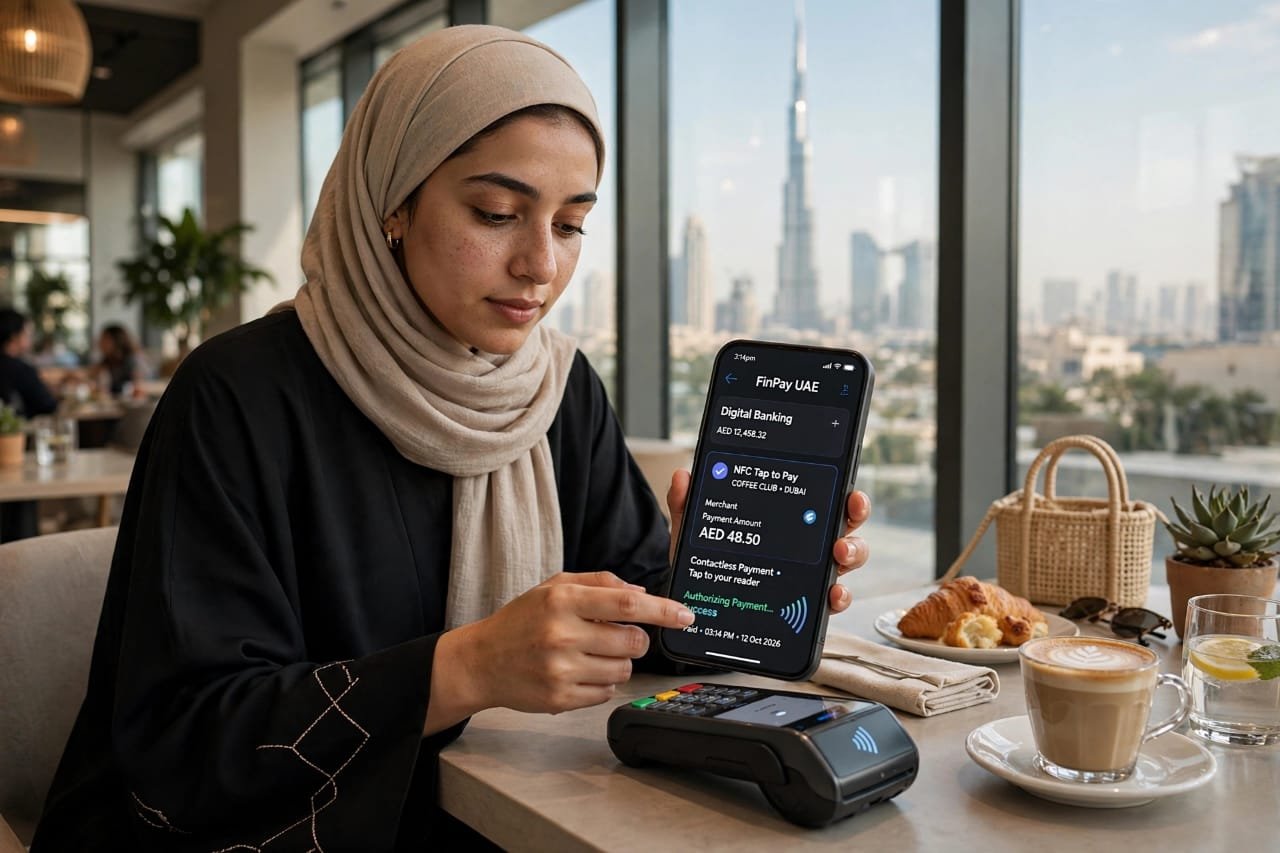
In certain UAE banking and device solutions, you can pay using a digital wallet, such as Apple Pay or Google Pay. Contactless payments Dubai shoppers make can help to diminish the need of holding physical cards, though it relies on the acceptance of the merchant’s payment terminal.
Adopting cashless payments UAE can simplify the checkout process for businesses. When choosing a payment gateway provider, retailers need to verify fees, settlement timelines, refund procedures and integration capabilities with their current point-of-sale environment.
4. Online Bank Account UAE: Easier Account Opening
Gone are the days of manually opening an account with a physical branch.The online account opening process is a key component of digital banking. Eligible candidates can present identification papers, get identity verified and apply via application or web, depending on the bank.
In an online bank account UAE application, requirements typically consist of a valid Emirates ID (for eligible residents) and the required documents requested by the bank, such as passport information. Eligibility requirements, documentation and account options can be different for non-residents.
Check if there is any minimum salary requirement, minimum balance, monthly fee or any restrictions on international transfers of the account before applying. While online account opening UAE can be a time saver, it’s not a guaranteed process and may still need further verification.
5. Fintech Dubai and the Rise of Open Finance
Fintech Dubai companies are crafting products and services to integrate payments, account details, and financial management. An important development is open finance where the authorised provider can access the eligible financial data or initiate transactions with the explicit consent of the customer.
The CBUAE published its Open Finance Regulation in July 2025, which sets forth the licensing requirements, secure communication and customer consent requirements. It is being phased in, customers should determine which services are available via approved providers.
Open finance UAE services could help consumers to more easily access financial data from multiple providers and control accounts via integrated applications. Companies also may find new approaches to creating payment and financial management solutions.
6. Digital Banking Security Remains Essential
Online convenience doesn’t eliminate the risks of online fraud. Customers may be vulnerable to financial loss through fake banking messages, phishing websites, stolen passwords and fraudulent payment requests.
Both banks and fintech companies need to safeguard their technology, while customers must as well. Use good, individual passwords and, if available, biometric authentication. Never give one-time passwords or PINs for banking to anyone calling them from a bank.
Regularly review transaction notifications, and call your bank using the authorized phone number or app if you see a strange payment. Check out the publisher and regulatory status of any financial app before installing it.
What UAE Banking Customers Should Expect Next
The way the banking industry is heading in 2026 is obvious: the majority of transactions are happening via mobile apps, instant payment platforms and integrated financial services. The most important thing for customers is to ensure flexibility, clarity of charges, dependable assistance, and robust security measures.
When signing up for new financial tech services, take their official advice, and shop around when comparing digital services offered by your bank. The best banking solution is the one that is useful to you and gives you the control of your finances and personal information.