

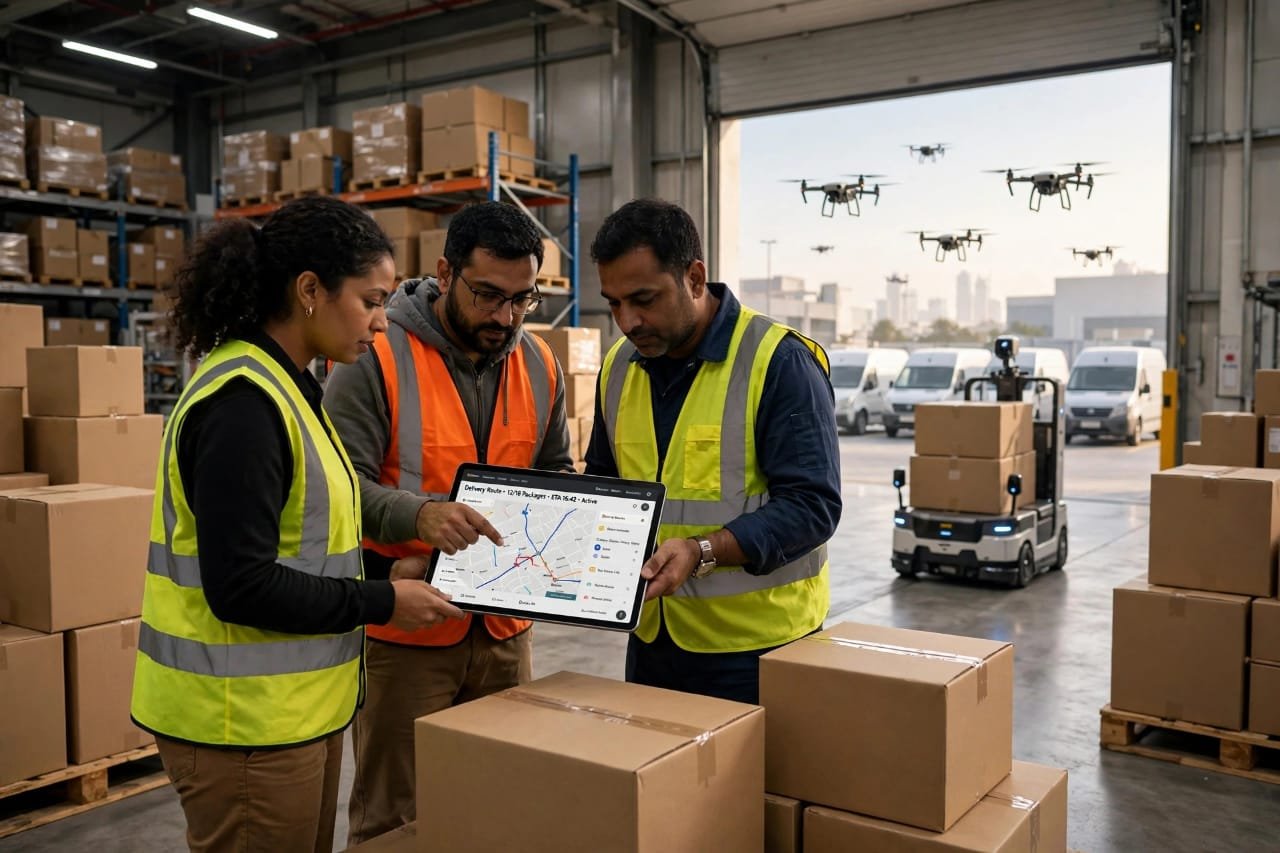
Dubai’s logistics sector is adjusting to the increase in online purchases and adjusting to new trade patterns and businesses looking for faster deliveries. Dubai’s geographical position is between Asia, Europe and Africa. Its seaports, airports and road infrastructure, makes it a vital distribution hub for trade in the region and throughout the world.
The UAE ecommerce market is expected to grow to AED 42.2 billion in 2025, from AED 17.6 billion in 2020. EZDubai and Euromonitor International estimate the market to grow to AED 67.2 billion by 2030. This expansion offers a need for improved warehousing, order fulfilment and distribution.
1. E-Commerce Is Reshaping the Logistics Industry in Dubai
E-commerce businesses must have logistics providers. Who can keep goods in stock, handle orders and ensure timely delivery without unnecessary delays. Consequently, UAE-based e-commerce logistics providers are focusing on technologies such as inventory tracking and automated order processing and fulfilment centres.
Also read: How to Start an E-Commerce Business in Dubai in 2026
For smaller online enterprises, these activities can be outsourced. Which could eliminate the need for them to have a store or delivery fleet. Larger retailers might choose to establish facilities and systems to connect their websites straight to the warehouse operations.
The EZDubai e-commerce zone in Dubai South is where companies can find access to logistics infrastructure and regional distribution networks.
2. Warehousing Demand and Smarter Storage
As companies import, store and distribute goods, space in the warehouse is still a key consideration. According to Knight Frank’s July 2026 review, Dubai saw a 12.3 million square feet increase in new industrial and logistics needs during the first half of 2026, whereas the first half of 2025 saw 11.5 million square feet.
However, Dubai South also came in first in Dubai for warehouse rental growth with a figure of 22% year on year.
When businesses are choosing the best warehousing companies Dubai, they should take into account elements such as location, storage conditions, loading facilities, and access to key transport routes. The rental fee for a warehouse in Dubai varies significantly from one location to another, depending on the services it provides and the type of building.
Today, warehouse managers are utilizing warehouse management software, barcode identification and automatic stock notifications to enhance inventory management UAE operations. Businesses can use these tools to spot stock shortages, decrease picking mistakes, and make orders go through faster.
3. Third-Party Logistics and Outsourced Fulfilment
By engaging the services of third party logistics UAE companies, businesses can delegate storage, packing, shipping and returns. This can be beneficial for startups and online retailers and brands entering into the UAE.
When looking at 3PL companies in Dubai, businesses will need to look into whether the provider will provide inventory management, e-commerce integration, customs coordination and returns processing. Some providers are involved in the supply chain, and some are specialised in storage or transportation.
The right service depends on the amount of orders, the type of the product and the destination of delivery. A small company with a few hundred parcels sent monthly might require a different package from a distributor that sends pallets of parcels across a number of countries monthly.
4. Faster Last-Mile Delivery
The last mile of delivery directly influences customer satisfaction. Last mile delivery Dubai companies are confronted with practical challenges. Like delivery time windows, failed delivery attempts, building access, and traffic.
In recent years, delivery management systems have become a popular tool. Used for businesses to manage their routes, track their drivers, and provide real-time updates to their customers. With better routing, extra miles can be avoided. Convenient pickup locations and flexible delivery hours can help minimize repeat trips.
Transparency in delivery and easy returns policies are equally crucial for online retailers as the speed of delivery. In some cases, same-day delivery might work for products and locations, but isn’t always the most cost-effective choice.
5. Freight Forwarding and Cross-Border Trade
The international connections provided by Dubai helps facilitate imports, exports and regional distribution. DP World’s Jebel Ali Port is a hub for sea freight to be linked to road transport and other logistics services. In 2024, the port was responsible for 15.5 million twenty-foot equivalent units (TEUs), the largest volume in containers since 2015.
When entering into a partnership with a freight forwarding company in Dubai, companies should compare transit times, customs support, cargo insurance and shipment tracking. Freight forwarding Dubai can also help arrange sea, air and road transport, and cross-border shipping UAE operations need to be properly documented and adhere to the regulations of the destination country.
Dubai Customs has also introduced digital solutions, bridging the gap between trade processes and online sellers’ needs in cross-border e-commerce. These systems are significant to businesses that send out lots of shipments across borders.
What Businesses Should Prioritise in 2026
Going with lowest cost logistics provider can result in substandard stock visibility and hidden costs, delays, etc. A business should review complete fulfilment costs, delivery coverage, access to warehouses and the integration of technology with the provider before choosing one.
Ecommerce growth is driving the logistics industry in Dubai, as well as the demand for warehouse space that’s appropriate and the desire for more predictable delivery times. Businesses with logistics operations that are aligned with their order volumes and expansion strategies will be more ready to control costs and meet customer needs in the UAE and beyond.
Frequently Asked Questions
1. What is driving Dubai’s logistics industry in 2026?
Some of the main growth drivers are the growth in ecommerce, international trade, the demand for warehouse space, and delivery speed expectations. There are also digital customs services and improved supply chain visibility that facilitate operations.
2. How do I choose a 3PL company in Dubai?
Compare storage and fulfilment costs, coverage, software integration, returns management, customs and service level agreements. Be sure to request a detailed price breakdown before agreeing to a contract.
3. Where are the main logistics and warehousing hubs in Dubai?
Jebel Ali is a significant seaport, freight hub and Dubai South is a logistics hub, aviation-related operations and ecommerce fulfillment hub. The optimum site is determined by transportation requirements, customers and warehouse expenses.
4. What logistics technology should UAE businesses consider?
Stock accuracy and delivery coordination can benefit from warehouse management systems, inventory tracking, and route optimisation as well as real time shipment updates. To select the tools that work with their sales and inventory systems.