

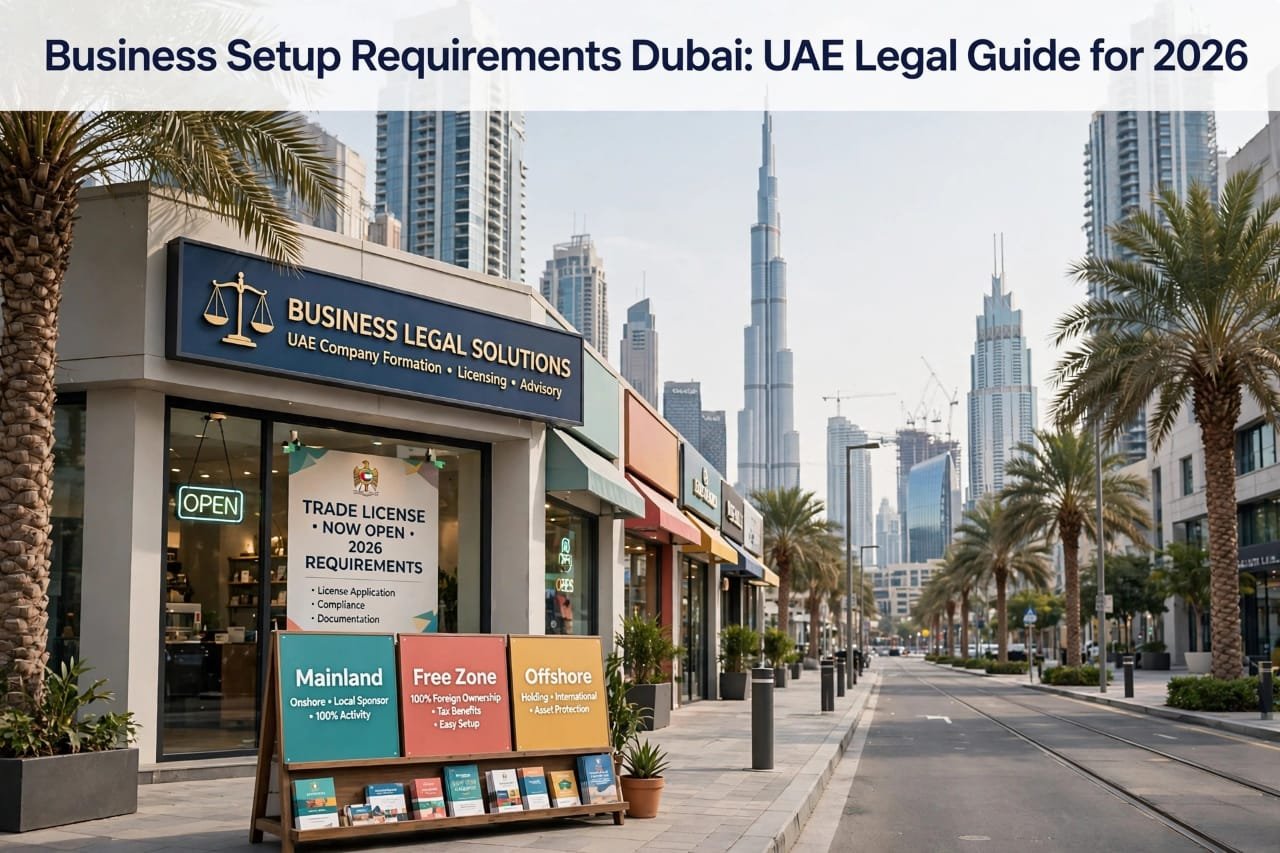
Entrepreneurs must adhere to certain legal and regulatory prerequisites before they can do business in the UAE; opening a business in the UAE provides access to regional and international markets. Knowing the requirements of the business setup authorities in Dubai can help the business owners to prevent delays in the registration process, penalties, and issues related to compliance.
When starting a consultancy, retail store, restaurant or online business, you will require the right legal structure, business licence and government authorizations. Other tax-related matters include tax registration, employment regulations, and regular reporting requirements.
What Are the Business Setup Requirements Dubai Entrepreneurs Must Follow?
Requirements will vary based on business activity, location and business structure. But most of the businesses need to go through these necessary steps.
1. Choose Your Business Activity and Legal Structure
Choosing a permitted economic activity is the first step to take when launching a business in UAE. The category of licence, legal structure and any other approvals you might require will depend on your activity.
There are several common legal forms such as:
- Limited Liability Company (LLC)
- Sole establishment
- Partnership
- Branch of a foreign company
- Free zone company
Entrepreneurs will also have to opt between Dubai company formation mainland companies and free zone companies formation in UAE. Generally, companies from the mainland are allowed to conduct business in the UAE, but for free zone companies, there are certain regulations to consider when approaching the market on the mainland.
2. Register Your Business and Obtain a Trade Licence
The Department of Economy and Tourism (DET) is responsible for registering and licensing businesses for the mainland in Dubai.
Typically, the steps are: reserving a company name, applying for the initial approval, drafting company documents, finding premises, and finally, seeking the appropriate licence.
There are various kinds of primary licences, such as commercial, professional, and industrial licences. This is supplemented by further authorisation with respective regulators for certain activities such as healthcare, financial services and education.
Free zone companies are required to register with the Free zone authority of their choice.
3. Understand Ownership and Beneficial Ownership Rules
100% foreign ownership is permitted for many activities in the UAE. Some strategic activities, however, might require other ownership requirements.
The companies are also subject to the applicable beneficial ownership requirements. This typically includes determining the natural persons that are the ultimate owners and/or controllers of the organization and keeping proper ownership documentation.
Always enquire with the relevant licensing body about the necessary criteria for company registration in Dubai.
Important Business Laws in UAE for Small Companies
Having a licence is the first step. There are a number of legal and financial responsibilities that need to be completed following the registration of the business.
4. Register for Corporate Tax and VAT
The UAE Corporate Tax regime primarily taxes taxable income at 0% where the taxable income is less than AED 375,000 and at 9% when the taxable income is more than AED 375,000.
The businesses liable to Corporate Tax need to register with the Federal Tax Authority (FTA), file returns and pay the due tax on time as per the specified deadlines.
VAT registration is typically required for supplies and imports with a total taxable value of AED 375,000 or more in the last 12 months. Voluntary registration is available for AED 187,500 which is subject to eligibility.
Small businesses should keep their invoices, accounts and financial statements in order to help with their tax filing.
5. Follow Employment Regulations
Employers in UAE must adhere to the laws of the UAE regarding employment.
However, most employers in the Mainland have to enroll at the Ministry of Human Resources and Emiratisation (MoHRE), get work permits and offer legally sound employment contracts.
Employers are also subject to guidelines on pay, hours of work, vacation, health and safety in the workplace, and end-of-service benefits. Employers in free zone should review employment practices of the relevant authority.
6. Prepare Legally Compliant Business Contracts
Businesses can help protect themselves when working with customers, suppliers, employees and business partners by having written agreements.
Payment terms, responsibility, delivery conditions, confidentiality and dispute resolution should be specified in contracts.
Companies also need to be aware of the relevant consumer protection, intellectual property and data protection obligations.
How Can Small Businesses Maintain UAE Business Compliance?
Develop a compliance calendar including licence renewals, tax deadlines, employee documentation, etc. and regulatory submissions.
Ensure that company records are kept up to date, accounting records are kept and ownership and/or business information is notified to the relevant authority where it changes.
Before undertaking regulated activities or entering in complex agreements, obtain legal and/or accounting advice.
Conclusion
Knowing the UAE legal procedures before starting a company will aid entrepreneurs in setting their businesses on the right foot. Every step must be carefully planned, from selecting the right construction to getting a trade licence and fulfilling tax and employment duties.
It is important for small businesses to keep abreast of these regulations and get advice from a professional if they need it. Compliance ensures business operations are safeguarded and contributes to sustainable growth in the UAE.
Frequently Asked Questions
1. Can foreigners own 100% of a business in Dubai?
Yes. Foreign ownership is permitted in most business activities, with some restrictions in the strategic activities.
2. Is a trade licence mandatory in Dubai?
Yes. Commercial activities are only allowed in businesses that have obtained the relevant licence from the appropriate authority.
3. Do small businesses in the UAE have to pay corporate tax?
Businesses that are liable for Tax will need to register and file for Corporate Tax requirements. The rate that applies is based on taxable income and reliefs granted.
4. Can a free zone company operate in mainland Dubai?
In order to do business directly in the mainland market, the Free zone companies need to comply with relevant mainland licensing and regulatory requirements.