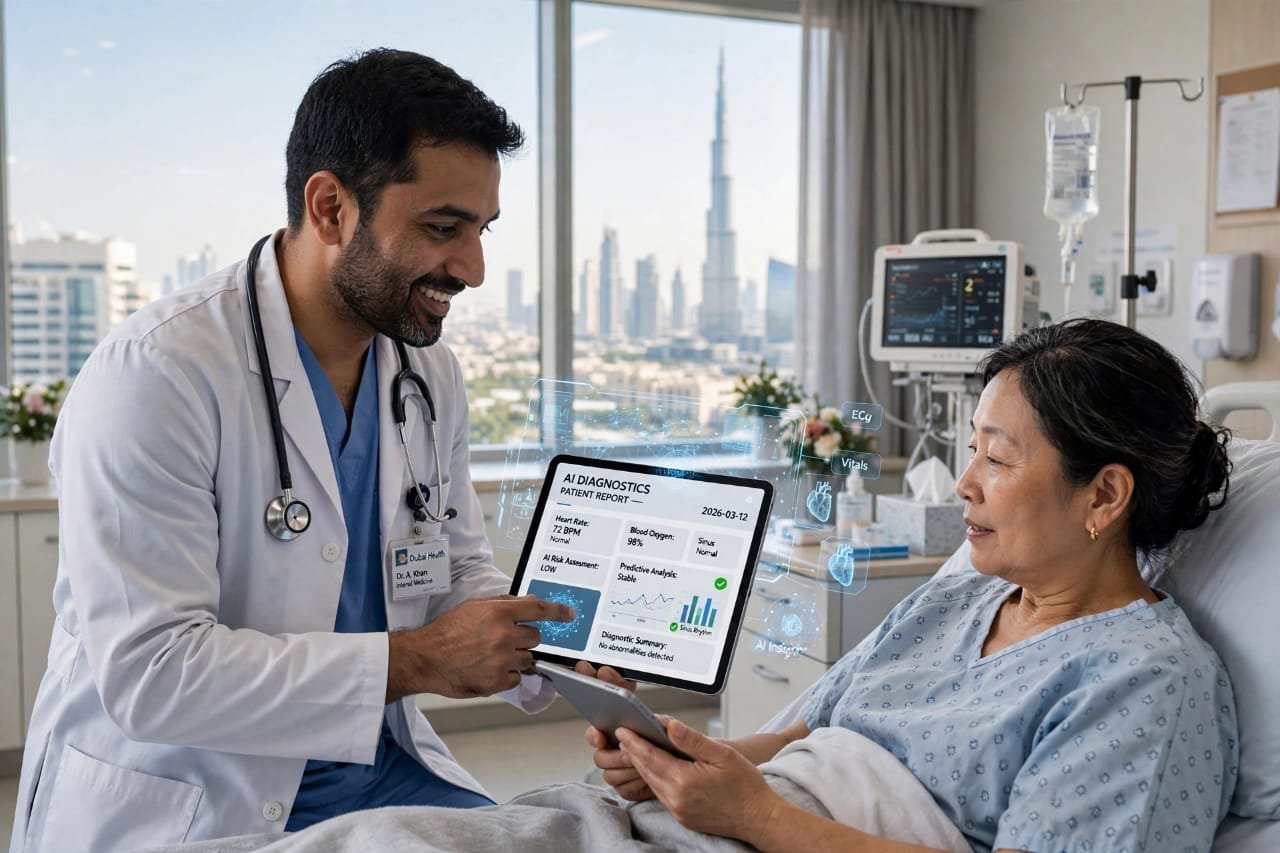
Dubai Healthcare Trends in 2026: What Is Changing?
The UAE healthcare trends of 2026 highlight the shift towards digital services, artificial intelligence (AI) and enhanced patient access. Technology is transforming the hospital sector, enhancing clinical decision-making, administrative tasks and managing medical records.
Dubai is a key component of this change. Dubai Health Authority (DHA) has already developed policies for digital health and AI, and national policies are trying to integrate healthcare information throughout the country. The Ministry of Health and Prevention (MoHAP) is also working on creating smart healthcare services and AI-based solutions. These changes are influencing access to and delivery of treatment.
1. Digital Health in Dubai Is Making Care More Accessible
Digital health is transforming Dubai’s patient journey from booking appointments to receiving medical guidance and follow-up care. Patients need not visit a clinic for each concern, as digital platforms are available for eligible services.
Also read: The Rise of Digital Healthcare in the United States
The electronic appointment scheduling and electronic prescriptions, electronic consultations can help limit unnecessary travel and make routine health care tasks easier. These services can help make health care more accessible for busy residents, parents, and those with chronic illnesses.
The UAE national digital health infrastructure also facilitates the sharing of information between the participating providers. For instance, the Riayati platform is helping to implement the National Unified Medical Record by enabling authorised providers to access relevant patient information from connected systems.
2. AI in Healthcare UAE: From Administration to Clinical Support
AI is emerging as a tool for healthcare organisations. It can assist with analyzing medical images, pattern recognition in patient records, aid in risk assessment, and automate routine administrative tasks, depending on the system’s approval and capabilities.
One of the most important examples of the UAE is the medical assistant Amal, developed by Emirates Health Services, which utilizes AI to assist in making medical decisions. The system will be announced in 2026, will provide pre-consultation interviews, and produce structured medical summaries to help clinical teams. EHS has also implemented AI-driven nursing staff management and virtual customer services solutions.
The advancements demonstrate the potential of AI in healthcare UAE to assist with accelerated workflows and enable more time to be dedicated to patient care. But, AI-generated content needs good clinical supervision. It should assist the competent practitioner, not supplant medical judgement.
3. Telemedicine UAE and Online Doctor Consultations
With Telemedicine UAE services, patients have another alternative to speak with healthcare professionals. Patients can get guidance on minor illnesses, and talk about test results and book appointments via video calls or other agreed upon digital pathways.
Online doctor consultations in Dubai can be helpful in situations where it is not feasible to travel for an appointment, or when a physical examination is not needed. It can also serve as a means for patients to stay in touch with their physicians in between visits.
But not all examinations can be done remotely. Major injuries and/or urgent symptoms may mean an in-person evaluation or emergency service is necessary, especially if pain is severe, breathing is difficult or if there are other symptoms occurring.
Patients have to ensure that they opt for licensed providers and that their insurance policy covers telehealth services UAE. In November 2025, DHA has released an updated version of its standards in telehealth, and it emphasizes the need for a well-regulated service delivery in Dubai.
4. Electronic Health Records and Healthcare Automation
EHR initiatives in UAE are assisting healthcare practitioners to streamline patient records. When systems are configured to exchange data properly, doctors can access pertinent medical data, lab findings, and treatment history, and avoid the necessity of relying exclusively on paper records or patient explanations.
NABIDH is an integral part of the health information exchange infrastructure in Dubai. In May 2025, the DHA released a circular regarding the electronic medical record systems that meet the NABIDH integration requirements and single sign-on authentication.
Other healthcare automation Dubai companies can use can additionally ease appointment scheduling, billing, reminders, and administrative procedures. These changes can help to decrease repetitive work but will not occur without robust systems and staff training and accurate data.
5. Private Healthcare Dubai: A Greater Focus on Patient Experience
Patients cannot ignore the convenience, communication and service quality of a private healthcare Dubai provider due to the competition among them.
The use of digital booking systems, access to test results and easy follow-up instructions online can enhance the patient experience in Dubai hospitals and clinics. Some providers might also employ linked monitoring tools that can assist with monitoring specific health indicators between visits.
Better care is not achieved through technology. There is still a need for clear explanations, appropriate treatment options and access to qualified clinicians. It is also crucial that healthcare providers make digital services accessible to individuals with lower technical skills or prefer in-person interaction.
6. Data Privacy and Responsible AI Adoption
With the increasing adoption of connected systems in the healthcare sector in Dubai, safeguarding sensitive medical data is crucial.
Federal Law No. 2 of 2019 provides for the regulation of the use of information and communication technology in the field of healthcare in the UAE, among which are requirements concerning health data security and confidentiality. The DHA also has a dedicated policy on the use of AI in Dubai healthcare services.
Before purchasing new tools, healthcare providers should also evaluate data security, access controls, system accuracy and human oversight. Patients can take measures to secure their information by utilizing official apps and also vetting providers and staying clear of unverified apps.
In the midst of these changes, the primary focus of the UAE healthcare trends 2026 is practical, making healthcare more accessible, more streamlined, and more technologically advanced, allowing for safe and effective patient care.
Conclusion
UAE Healthcare Trends 2026 provides insights into the emerging trends in Dubai’s healthcare landscape, including the influence of digital health, AI, and telemedicine. Another benefit of using health records and healthcare automation is that they can facilitate the efficient handling of information and routine tasks by healthcare providers. But, technology has to come hand-in-hand with skilled medical practitioners, robust data protection and communication. Easier access to reliable healthcare and a better experience in every part of treatment will be the real benefit for patients.